Skip to contentRepaplexrepair or replace, decided by the numbersAutomatic follows the operating system setting. Light and dark override it and are remembered in this browser.
commercial oven: a commercial oven or range that has stopped heating or will not light
On commercial cooking equipment the repair is rarely the hard part - the publisher's own dearest job in this set, $2,556, is a fraction of what the machine cost to install. What makes this category different from every other one it services is that some of its faults are safety faults rather than performance faults, so the first thing to settle is not the price of a part but whether the equipment should be lit at all. The job here starts with a path rather than a part: you can smell gas - shut the appliance off at the isolation valve, ventilate, avoid anything electrical including light switches, and call the utility from outside before anything else: commercial gas volumes are not domestic gas volumes and a leak in a working kitchen is a different order of problem [S1]. That is why a commercial oven or range that has stopped heating or will not light belongs in the high-risk column before it belongs to any repair, and why the machine has to be unplugged before anything else is touched. Water and degreaser put into the controls by the way the line is cleaned is the first suspect — no part needed [S1], about 15 minutes. Owners describe it as the oven will not light at open after a deep clean the night before, the deck oven runs thirty degrees under and the product keeps coming out uneven, the burner lights and then goes out instead of catching, the oven takes longer to come back between loads than it used to or the range worked at close and will not fire in the morning.
What the fault looks like
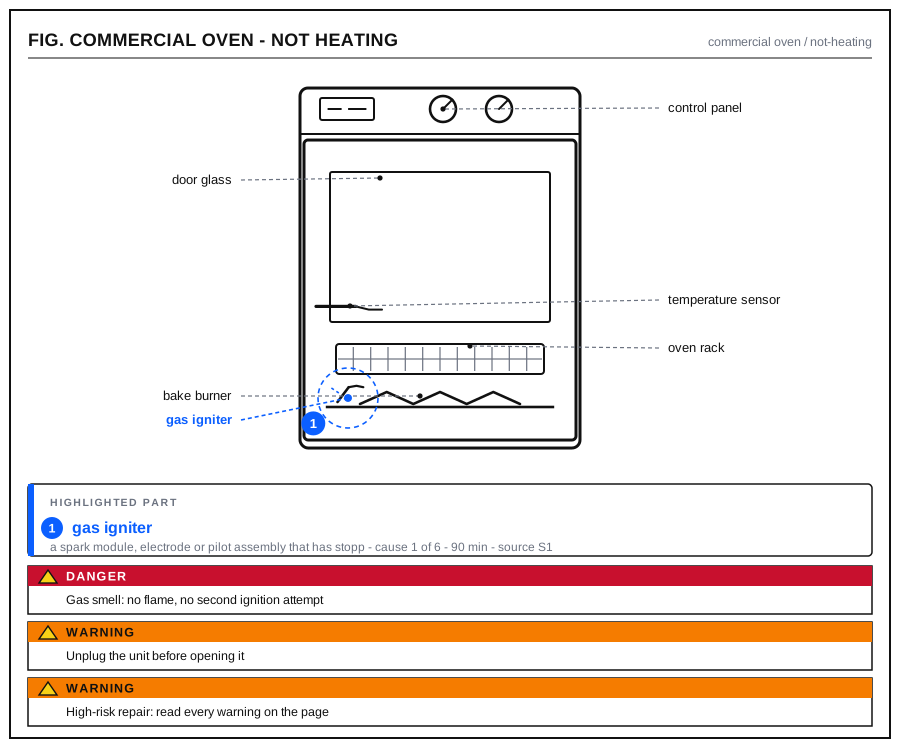
Fig. COMMERCIAL OVEN - NOT HEATING
What a technician actually does
a spark module, electrode or pilot assembly that has stopped igniting the burner [S1]
high likelihoodadvancednot pricedabout 90 min
the oven will not light at open after a deep clean the night beforethe burner lights and then goes out instead of catching
The most common complaint the publisher takes on cooking equipment, by a wide margin, and the cheapest end of its own page. Spark modules, electrodes and pilot assemblies live in an environment of grease, steam and constant cleaning, and the publisher names cleaning as what finishes them: water reaches where it should not during a wash down and the module never recovers. The pattern that identifies it is timing rather than diagnosis - the equipment survives service and then fails overnight after close, which is why so many of these calls arrive first thing in the morning. The source's own advice is that this is worth acting on rather than working around, because the failure is at the cheap end of the range and a burner lit by hand around a module that will not fire is a different risk.
S1 publishes no component level median for commercial cooking equipment and says why on the page: the counts per component on 38 jobs would be single digits, and a median built on three repairs is a number that looks precise and is not. The only figures it prints are the median and middle half of the job set as a whole, so no spark module, electrode or pilot assembly price is claimed here.
a thermostat or probe that has drifted, on a deck oven that holds temperature all service [S1]
high likelihoodmediumnot pricedabout 75 min
the deck oven runs thirty degrees under and the product keeps coming out uneventhe oven takes longer to come back between loads than it used to
The second most common pattern the publisher reports and the one it calls the most expensive to ignore, because it never announces itself: a deck oven running thirty degrees under simply produces inconsistent product until somebody connects the complaints on the pass to the equipment. The published mechanism is that by the time the link is made the cause, usually a thermostat or a probe, has often taken the controls with it, which is why the same fault appears at both the cheap and the expensive end of this page. The free test is the one the publisher's own framing implies - a separate oven thermometer against the set point - and it is worth doing before ordering anything.
S1 withholds component level medians on this equipment by its own stated policy and prints none for a thermostat, a probe or a control on a commercial oven, so the part is described and not priced. The oven thermometer test that identifies the fault costs nothing and is the reason this entry is not a technician call on its own.
a dropped hinge or a seal that has hardened, so heat leaves the cavity [S1]
medium likelihoodmediumnot pricedabout 60 min
the oven takes longer to come back between loads than it used tothe deck oven runs thirty degrees under and the product keeps coming out uneven
The third failure the publisher lists and the one it calls the most underestimated, because a commercial oven door takes hundreds of cycles a day and a door that no longer closes properly does not look like a fault. A hinge that has dropped or a seal that has hardened means heat escaping into a kitchen that is already too hot, longer recovery times between loads, and gas burned for nothing - all of which read to the operator as the oven being slow rather than the door being worn. The tell on the visit is free: look at the door line rather than the thermometer, because this cause and a drifting thermostat produce the same complaint from the pass.
no source behind this record prices a commercial oven door hinge, gasket or seal on its own, and S1 states that component level medians are not shown on this equipment. The door is described here without a figure rather than borrowing one from a domestic oven page, which is a different machine.
the gas train - a safety valve, thermocouple, regulator or the wrong orifice for the supply [S1]
medium likelihoodpronot pricedabout 120 min
the burner lights and then goes out instead of catchingthe oven will not light at open after a deep clean the night before
The branch that decides whether the kitchen keeps cooking this week, and the one the publisher treats as a safety matter rather than a performance matter. Gas equipment fails at the ignition and the gas train, and the parts are mostly inexpensive - but the publisher separates this class of fault from the rest of the page for a specific reason: some gas faults are safety issues rather than performance issues, and a burner that lights unreliably is a burner accumulating unburned gas before it catches. There is a format question underneath it that has to be asked on the phone, because a commercial oven converted at installation behaves differently when it misbehaves: natural gas and propane equipment are not interchangeable and use different orifices and regulators. The published instruction if gas can be smelled is to stop rather than troubleshoot.
S1 publishes no part-only prices for the gas train on a commercial oven and withholds component level medians on this equipment by policy, so no valve, thermocouple or orifice price is claimed. The publisher does print what its range costs at the top and bottom, and that is used in the decision block rather than assigned to a component.
the element or the control on electric equipment, where the control is the expensive end [S1]
medium likelihoodpronot pricedabout 120 min
the oven takes longer to come back between loads than it used tothe deck oven runs thirty degrees under and the product keeps coming out uneven
The electric half of the same page, and a genuinely different failure path from the gas one: electric equipment fails at the elements and the controls, elements are straightforward and predictable, and controls are the branch that gets expensive - on modern equipment with digital thermostats and programmable profiles a single control failure can approach the top of the publisher's range. The consequence the source draws is about scheduling rather than about price: electric faults are almost never dangerous, so an electric oven can usually keep running in a limited way while a part is on order, and the publisher says whether it can. That is the opposite of the answer it gives on gas, and it is the reason the format question is asked before the fault question.
S1 does not publish an element, relay or control board price for commercial cooking equipment and states that component level medians are withheld because the counts behind them would be too thin. The publisher does note that a control failure on modern equipment with digital thermostats and programmable profiles can approach the top of its range on its own, and that statement is quoted rather than converted into a price.
Repair or replace?
Ask two questions on the phone before anything is booked, because between them they decide most of this page. First, gas or electric, and if the equipment was converted at installation say so, because natural gas and propane equipment use different orifices and regulators and behave differently when they misbehave. Second, when the equipment can actually be off: not when it is convenient, but the window between services, because a commercial oven cannot be worked on mid service and the publisher names that as the detail that most often saves a second visit. If you can smell gas, stop there rather than troubleshooting - shut the appliance off at the isolation valve, ventilate, avoid anything electrical including light switches, and call the utility from outside. Otherwise, before a technician is booked, put your own thermometer in the cavity against the set point: a deck oven running thirty degrees under is a drifting thermostat or probe, and catching it at that stage is what keeps it from taking the controls with it. And look at the door line, because a dropped hinge or a hardened seal produces the same complaint from the pass as a drifting thermostat and is the most underestimated cause on the page. If the equipment failed overnight after a deep clean, say so - that single fact points at ignition and at water in the controls rather than at anything that wore out. Then the sequence is ignition, cleaning damage, thermostat or probe, door, gas train, and the electric control last. [S1]
One dataset sits behind this page and every figure on it names that dataset: 38 completed commercial cooking repairs from the publisher's own service records, from invoices above $200 - the line above which a part was fitted rather than the visit ending at diagnosis. The median is $745 and the band above is the middle half of those jobs, $463 to $1,361, so band, median and count come from the same job set. The publisher also prints the two extremes it saw, $225 at the bottom, usually an igniter or a switch, and $2,556 at the top, control and gas train work together, and those are named here as extremes rather than used as a band. The $375 the publisher prints for a residential oven and range is the same technicians on a different machine and a different dataset, and it is compared with and never added to or subtracted from the commercial figures. No second dataset is blended into any number on this page.
Repair, essentially always, and the publisher does not treat the arithmetic as close: a commercial range or deck oven is a five figure purchase plus installation, gas connection and often a hood modification, so even the dearest job in its set, $2,556, is a fraction of replacement. The equipment is also the most repairable thing in the kitchen, with burners, valves, thermostats, elements, doors and controls all serviced individually on machines designed to work for twenty years. The publisher names what ends one, and it is neither age nor a failed component: a cracked deck or a chassis that has corroded through. It publishes no replacement figure and none is invented here. The one recurring exception it names is a specification problem rather than a repair problem, and it is worth recognising because it looks like bad luck: light commercial equipment in a heavy commercial setting, in cafes and small kitchens, specified for occasional use and run for a full service every day. That machine fails repeatedly regardless of what is fitted, usually at a different point each time, and the publisher's honest answer is a specification change rather than another visit - even though the second is better business for it.
no planning life in years is claimed, because the source publishes a design statement rather than a life expectancy: S1 says commercial cooking equipment is built to be serviced for twenty years and that burners, valves, thermostats, elements, doors and controls are all individually serviceable, and it does not print a median or expected life for the machine. What it prints instead is the condition that ends one, and it is not a year and not a component: a cracked deck or a chassis that has corroded through. That is an inspection finding rather than a planning number, so the decision block states the condition and prints no figure of years.
water and degreaser put into the controls by the way the line is cleaned [S1]
high likelihoodeasyno part neededabout 15 min
the oven will not light at open after a deep clean the night beforethe range worked at close and will not fire in the morning
The finding the publisher says surprises operators most and the one it is most certain of: commercial cooking equipment fails from being cleaned far more often than from being used. Pressure washing a line, spraying degreaser into a burner assembly or hosing down around an electrical enclosure puts water and caustic chemistry exactly where the controls live, and the machine then fails overnight rather than during service. Nothing is bought to prevent it, which is why no part price is claimed. The published version is specific enough to act on the same evening: wipe rather than spray around any control, keep degreaser off electrodes and spark modules, and let anything that has been washed dry fully before it is fired. The source adds that none of that slows a close down.
Sources
[S1]Bozmanfix (commercial cooking equipment service records, published 7 September 2026) (2026-09). the count behind this page - 38 completed commercial cooking repairs from the publisher's own service records across six states, from invoices above $200; the median of $745 and the middle half of $463 to $1,361; the two extremes it prints, $225 at the bottom, usually an igniter or a switch, and $2,556 at the top, control and gas train work together; the residential oven and range comparison of $375 with the same technicians, and the publisher's own explanation that cooking equipment runs at double its residential equivalent while every other commercial category it services runs twenty to forty percent above; the $99 service call credited against the repair; the statement that component level breakdowns are not shown because the counts behind them would be too thin to state honestly, with the reason spelled out - the counts per component on 38 jobs would be single digits and a median built on three repairs looks precise and is not; the four places the cost gap comes from - commercial gas volume several times a domestic burner with the gas train, regulators and safety devices to match, a duty cycle of twelve hours in a deck oven against one hour at home, equipment that has to be disconnected and pulled from a line before it can be reached, and parts through a single distributor with no aftermarket; the failure pattern in the publisher's own order - ignition first by a wide margin, including spark modules, electrodes and pilot assemblies living in grease and steam and being finished by wash downs, temperature drift second and the most expensive to ignore because a deck oven thirty degrees under announces nothing and the cause, usually a thermostat or a probe, has often taken the controls with it by the time anyone connects the complaints, and doors and seals third and most underestimated with hundreds of cycles a day, dropped hinges and hardened seals sending heat into a kitchen that is already too hot; the published claim that commercial cooking equipment fails from being cleaned far more often than from being used, with pressure washing, degreaser sprayed into burner assemblies and hosing around electrical enclosures putting water and caustic chemistry where the controls live and the equipment failing overnight after close; the gas and electric split, gas failing at ignition and the gas train with safety valves and thermocouples and some of those faults being safety issues rather than performance ones, electric failing at elements and controls with controls the expensive branch and almost never dangerous; the format questions the publisher asks before anything is ordered - the data plate, natural gas against propane because the two are not interchangeable and use different orifices and regulators, conversion at installation, and the actual window in which the equipment can be off; the safety instruction if gas can be smelled - shut off at the isolation valve, ventilate, avoid anything electrical including light switches, call the utility from outside; repair rather than replace on a five figure machine with burners, valves, thermostats, elements, doors and controls all individually serviceable over a twenty year design life, the two conditions that end one being a cracked deck or a chassis corroded through, and the recurring exception of light commercial equipment in a heavy commercial setting, where the publisher says the honest answer is a specification change rather than another repair; and the scope limits - no fryers, no combi ovens with steam generation, no hood or fire suppression work.
Last verified: 2026-09-19. Prices are US market figures from the sources above; your quote may differ.
Built from a fact record, not from a template: every number above is tied to one of the sources and the record is re-checked against them. Editorial choices (which symptom leads, which cause is the single tell) are kept in a separate block so the facts stay auditable.
Quick answers
How much does it cost to fix a commercial oven with this problem?
Completed repairs run $463–$1,361 according to the sources cited on this page, after a diagnostic fee of $99.
How long does a commercial oven last?
No source cited on this page publishes an expected life for the machine itself, so the page says so rather than guessing; the decision here turns on the fault and on how the unit is built and installed, not on an age line.
Repair or replace?
Ask two questions on the phone before anything is booked, because between them they decide most of this page. First, gas or electric, and if the equipment was converted at installation say so, because natural gas and propane equipment use different orifices and regulators and behave differently when they misbehave. Second, when the equipment can actually be off: not when it is convenient, but the window between services, because a commercial oven cannot be worked on mid service and the publisher names that as the detail that most often saves a second visit. If you can smell gas, stop there rather than troubleshooting - shut the appliance off at the isolation valve, ventilate, avoid anything electrical including light switches, and call the utility from outside. Otherwise, before a technician is booked, put your own thermometer in the cavity against the set point: a deck oven running thirty degrees under is a drifting thermostat or probe, and catching it at that stage is what keeps it from taking the controls with it. And look at the door line, because a dropped hinge or a hardened seal produces the same complaint from the pass as a drifting thermostat and is the most underestimated cause on the page. If the equipment failed overnight after a deep clean, say so - that single fact points at ignition and at water in the controls rather than at anything that wore out. Then the sequence is ignition, cleaning damage, thermostat or probe, door, gas train, and the electric control last.